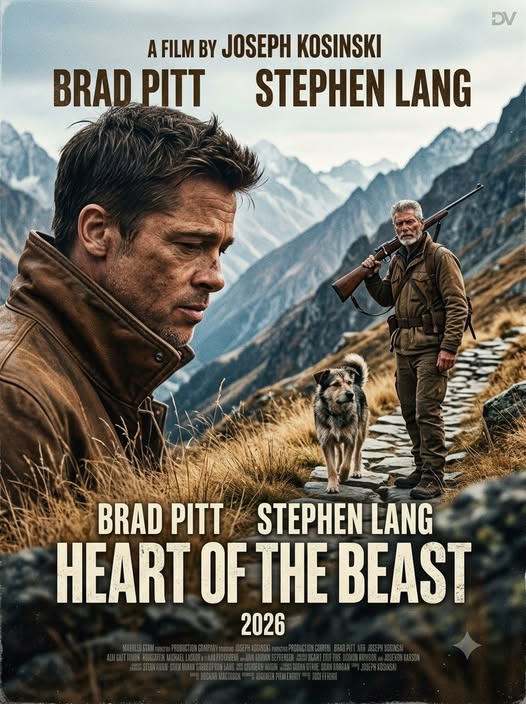

I went into this expecting another generic man-versus-nature survival thriller. You know the drill: frozen peaks, rugged beards, heavy breathing against howling wind, and maybe a rogue grizzly bear stalking from the shadows. But within forty minutes, my jaw was practically on the floor. This isn’t just about surviving the cold—it’s a calculated, high-octane psychological nightmare disguised as an outdoor epic.

The Unforgiving Setup
Set against the suffocating vastness of an isolated mountain range, the story introduces an ex-specialist turned reclusive hunter who has buried his past so deep even he barely recognizes himself. He wants total isolation. The wilderness, however, has other plans.

When an unexplainable carnage tears through the lower valley, his solitude is shattered. In his desperate bid to understand the slaughter, he collides with a reclusive, weathered survivalist who has inhabited these treacherous ridges for decades. These two men couldn’t be more polarized: one relies on tactical precision and repressed trauma; the other operates on primal instinct and raw territorial grit. They instantly distrust each other. But when you realize something unnatural is tracking your every footstep in sub-zero snow, pride dies quickly.

Mild spoilers ahead — nothing past the midpoint.
Into the Valley of Shadows
The pacing shifts into overdrive once the pair ventures into the gorge where the disturbance originated. They anticipate an apex predator—perhaps an abnormally aggressive bear or an elusive pack of wolves driven mad by starvation. But then… everything changes.
The first shock hits when they discover deliberate, calculated traps scattered across what should be completely uncharted terrain. These aren’t crude wooden snares left by casual poachers; they are tactical kill zones designed to herd prey toward a bottleneck. That’s when the realization sinks in: whatever is out here isn’t just killing for food. It’s hunting with an intelligence that mirrors their own.
And that’s where things get interesting. During a sudden blizzard at the film’s midpoint, our two protagonists are forced into a claustrophobic subterranean cavern system. Here’s what most people missed in the opening act: the hunter’s classified military past isn’t just emotional baggage—it directly ties into the secret deep within these peaks. A cryptic insignia carved into a subterranean bunker door triggers an immediate, terrifying question: did the hunter run away to this mountain by coincidence, or was he unconsciously drawn back to something his former handlers left behind to die?
What Delivers the Pure Adrenaline
- Visceral Cinematography: The camera work makes you feel the frostbite and the sheer vertigo of 3,000-foot drops without relying on dizzying shaky-cam gimmicks.
- Raw Chemistry: The tension between the two leads crackles with unspoken history and bitter skepticism before forging into reluctant brotherhood.
- Sound Design Mastery: The terrifying use of ambient mountain silence punctuated by deep, bone-rattling mechanical rumbles keeps your heart rate spiked.
Where It Stumbles Slightly
- Early Exposition: The opening ten minutes lean a bit heavy on somber voiceover before letting the visual environment do the talking.
- Secondary Logic: A few wilderness survival choices during the initial ascent feel dialed up solely for Hollywood tension rather than realistic mountain craft.
The Midpoint Scene That Left Me Speechless
There is a three-minute sequence on a narrow suspension ridge where neither man can speak or make a sound above a whisper while fog rolls in around their boots. Seeing a heavy silhouette emerge not from the brush below, but slowly lowering from the sheer rock face above them with pinpoint purpose, delivered one of the most chilling theater moments of the decade.
Final Verdict
Heart of the Beast is a relentless, gripping ride that pulls the rug out from under the survival genre. It respects your intelligence while continuously denying you a moment to breathe. If you’re craving a rugged, edge-of-your-seat thriller that combines sweeping wilderness grandeur with hair-raising dread, do not sleep on this when it hits theaters.
What Viewers Are Saying
Marcus Vance: “That midpoint shift completely rewired my brain. I was gripping my armrest so hard my knuckles turned white.”
Elena Brooks: “The landscape itself feels like a villain waiting to swallow them whole. Pure visual poetry mixed with dread.”
Devon Miller: “Easily the most intense theater experience I’ve had in years. The sound engineering alone deserves every award.”
Sarah Jenkins: “I thought I had the entire plot figured out in the first twenty minutes. Boy, was I wrong.”
Tyler Reed: “The dynamic between the two leads is incredible. It feels earned, gritty, and completely devoid of cheesy action one-liners.”
Frequently Asked Questions
Is Heart of the Beast based on a true story?
No, the film is an original cinematic screenplay designed as a high-stakes survival thriller blending wilderness lore with covert action elements.
Is this a traditional creature feature or a psychological thriller?
While marketing emphasizes the brutal elements of the wild, the narrative quickly evolves into an intense, multifaceted thriller where the real danger lies in uncovering who or what is coordinating the hunt.
Is there an end-credits scene?
There is no post-credits scene, but the emotional resonance of the final shot leaves plenty of room for debate long after the screen goes black.