Most modern action movies throw $200 million worth of CGI explosions at the screen and expect you to care. But forty years ago, one gritty survival thriller delivered more raw tension with just a damp forest, an army jacket, and a hunted veteran pushed past his breaking point.

If your only memory of John Rambo is an oil-slicked 80s superhero firing an M60 from the hip, you haven’t truly seen where it all began. Before the massive blockbuster sequels turned the character into a pop-culture punchline, there was a lean, brutal, and surprisingly heartbreaking character study about America’s discarded warriors.

A Quiet Walk Into a Living Nightmare
The setup is deceptively simple: John Rambo, a former Green Beret and decorated Vietnam veteran, drifts into the sleepy town of Hope, Washington. He’s not looking for trouble—he’s looking for a warm meal and the last surviving member of his old unit. Instead, he meets Sheriff Will Teasle, a small-town lawman who takes an instant dislike to the scruffy vagrant walking along his highway.

What should have been a routine drop-off at the city limits quickly spirals out of control. Teasle arrests him on bogus vagrancy charges, and the local deputies decide to abuse their authority behind closed doors. They don’t realize they aren’t bullying a helpless drifter—they are triggering a lethal combat machine suffering from catastrophic PTSD.
Mild spoilers ahead — nothing past the midpoint.
The Forest Turns Into a War Zone
When the brutal police harassment violently triggers Rambo’s flashbacks of prisoner-of-war torture, his military instincts take over in a flash of pure adrenaline. He escapes custody with bare hands and Flees into the freezing, mist-shrouded Cascade Mountains.
And then… everything changes.
Sheriff Teasle organizes an all-out manhunt with dogs, choppers, and high-powered rifles, completely arrogant in his belief that one man stands no chance against armed deputies in local terrain. But that’s where things get interesting.
Rambo doesn’t run away; he melts into the wilderness. The forest shifts from a snowy sanctuary into a deadly guerrilla combat zone. One by one, deputies fall victim to camouflaged snares, punji pits, and brutal psychological warfare. Yet here’s what most people missed: despite having lethal military training, Rambo deliberately avoids taking lives, neutralizing his pursuers with ruthless efficiency while pleading with them to back off.
When the town calls in the State Police and the National Guard, Rambo’s former commanding officer, Colonel Sam Trautman, arrives with an ominous warning: they aren’t hunting Rambo; Rambo is allowing them to survive. With a private army closing in on the mountain ridge, how far can a cornered soldier be pushed before the survival instincts turn into an all-out war?
What Hits Hard
- Raw, grounded tension: Practical stunts, real mountain cliffs, and freezing mud make every scrape and fall feel dangerously authentic.
- Sylvester Stallone’s nuanced acting: Stallone says very little in the first two acts, conveying deep sorrow, trauma, and hyper-vigilance through his eyes.
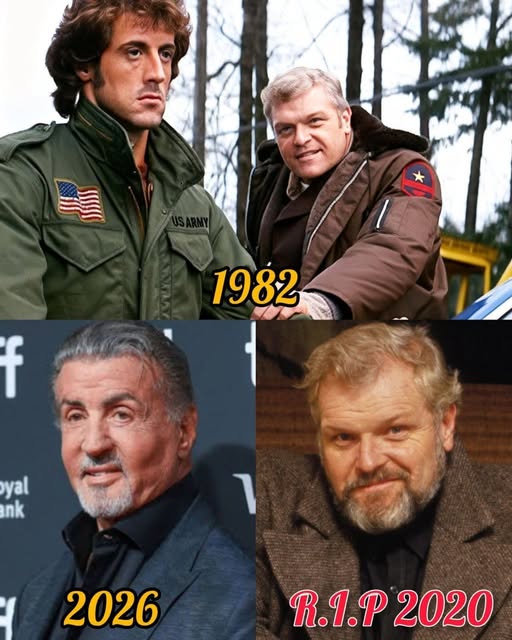
- A multi-layered antagonist: Brian Dennehy portrays Sheriff Teasle not as a cartoon villain, but as a stubborn, prideful man blinded by ego.
- Jerry Goldsmith’s haunting score: The melancholy trumpet theme perfectly echoes the lonely tragedy of a discarded soldier.
Where It Shows Its Age
- Caricatured secondary deputies: A few of the small-town officers are almost cartoonishly cruel in the station house sequence.
- 80s pacing rhythm: Modern viewers used to nonstop kinetic cutting might find the patient atmospheric buildup slower than expected.
Standout Moments
- The cliffside plunge: Trapped on a sheer rock face with a rogue helicopter sniper above, Rambo makes an impossible, spine-chilling leap into the pine canopy.
- Trautman’s chilling radio conversation: When Colonel Trautman gets on the radio to warn Teasle about Rambo’s lethality, the tension in the sheriff’s office is thick enough to cut with a combat knife.
Final Verdict
First Blood remains a masterclass in tension, atmospheric filmmaking, and emotional storytelling. It isn’t a mindless celebration of violence—it’s an aching indictment of how society abandons the very soldiers it breaks. If you want a gritty, pulse-pounding thriller with genuine soul and high stakes, this classic belongs at the top of your watchlist.
What Viewers Are Saying
- Marcus V.: “Forget the later sequels—this first one is pure cinema. Stallone’s physical presence and vulnerability blew me away.”
- Elena R.: “The cliff drop scene still makes my stomach drop every single time. Absolutely thrilling from start to finish.”
- David K.: “Brian Dennehy and Sylvester Stallone had insane chemistry. A battle of wills that never lets you catch your breath.”
- Sarah T.: “I went in expecting mindless 80s machismo and ended up genuinely emotional. What an unforgettable classic.”
- Liam B.: “The survival tactics in the Pacific Northwest wilderness make modern CGI action look completely hollow.”
Frequently Asked Questions
Is First Blood suitable for viewers who don’t typically watch action films?
Yes. Unlike later entries in the franchise, the film is primarily a psychological survival drama and character study focusing on post-war trauma and authority abuse.
Does Rambo kill a lot of people in this movie?
Surprisingly, no. Despite the high-stakes manhunt and heavy military weaponry, Rambo relies almost entirely on non-lethal defense tactics and evasion throughout the pursuit.
Is First Blood based on a book?
Yes, the film is an adaptation of David Morrell’s acclaimed 1972 novel of the same name, though the movie significantly softens Rambo’s character to make him a sympathetic survivor rather than a ruthless killer.