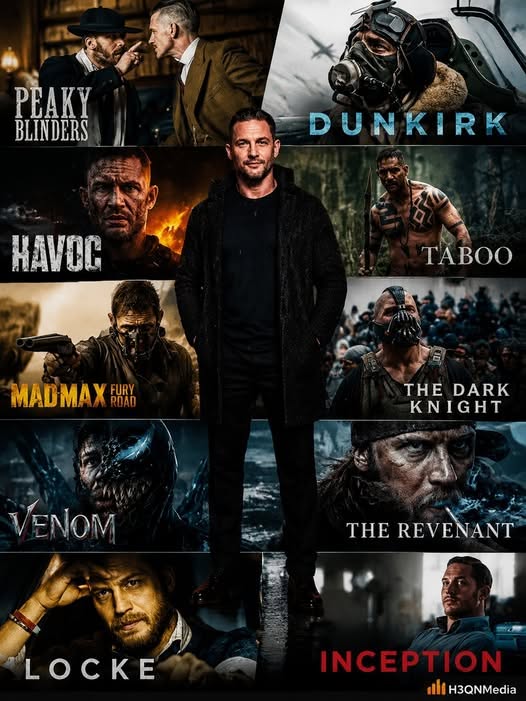

When Christopher Nolan cast Tom Hardy as Gotham’s reckoning in The Dark Knight Rises, moviegoers expected a hulking brute. What they didn’t anticipate was having cinema’s most expressive face completely muzzled behind steel and leather—stripping away an actor’s most valuable currency.

Most movie stars demand maximum visibility. Tom Hardy does the exact opposite. Whether he’s gasping behind an oxygen rig or trapped inside an armored cage, the man somehow delivers masterclasses in tension with nothing more than flared traps, shifting pupils, and vocal inflections that drill right into your skull.

The Anatomy of a Masked Menace
Set eight years after Batman took the fall for Harvey Dent’s crimes, Gotham City enjoys a brittle, fragile peace built on a lie. Billionaire Bruce Wayne has become an isolated hermit, broken physically and emotionally, while the underworld quietly festers beneath the city streets.

Enter Bane: an exiled revolutionary armed with raw military discipline and an absolute absence of mercy. Unlike the Joker’s theatrical, chaotic anarchy, Bane represents tactical calculation and unstoppable physical decay. When he drags Gotham down into systemic ruins, it doesn’t feel like a comic book showdown—it feels like an inevitable collapse.
Mild spoilers ahead — nothing past the midpoint.
Breaking the Bat: Where Things Turn Dark
Hardy packed on roughly 30 pounds of dense muscle to physically manifest the revolutionary commander. But mass alone doesn’t intimidate; posture and voice do. To project an unsettling authority through a muzzle that obscured his mouth and jaw, Hardy engineered that infamous, patrician, sing-song cadence—sounding like an antique aristocrat inhabiting the body of a demolition specialist.
And then… everything changes.
The turning point arrives not during a bombastic citywide battle, but inside a shadowy underground sewer chamber. Wayne enters expecting a standard duel of wits and gadgets, only to encounter an immovable wall. Bane doesn’t bother shouting. He talks calmly, almost politely, while dismantling Bruce Wayne piece by piece with brutal, mechanical precision.
Here’s what most people missed: Hardy rarely blinks in that sequence. Every ounce of emotion—spite, dominance, ideological conviction—burns strictly through his eyes and the tension in his neck. By the time Batman is thrown into the subterranean Pit, stripped of his fortune, armor, and hope, the psychological trap is sprung. But how does an empire built on brute will sustain itself once the real cracks in its ideology start to surface?
What Elevates the Performance
- Mastery of Micro-Expressions: Stripped of 60% of his facial real estate, Hardy communicates dread purely through heavy breathing, deliberate eye twitches, and physical pacing.
- Oppressive Physicality: His posture exudes calm dominance. Holding his jacket lapels like an executioner surveying his domain creates an instantly iconic silhouette.
- Sound Design Synergy: The guttural, metallic vocal track forces you to lean into every syllable, transforming exposition into a psychological assault.
Where the Armor Shows Cracks
- Auditory Polarities: The heavily altered audio mix baffled some viewers during initial theatrical runs, occasionally demanding subtitles for complete clarity.
- Shadow of the Predecessor: Following Heath Ledger’s lightning-in-a-bottle performance meant any antagonist would be subjected to unfair, almost impossible comparisons.
The Scene You Can’t Look Away From
The takeover of the Gotham Stock Exchange and the subsequent stadium blast are textbook blockbuster spectacle, but the quiet confrontation where Bane rests a single, heavy palm onto Daggett’s shoulder—whispering, “Do you feel in charge?”—remains one of the most chilling flexes of character authority in modern superhero history.
Final Verdict
Tom Hardy didn’t just play a comic book villain; he turned physical restriction into an avant-garde acting clinic. Watching him build a legendary antagonist out of sheer eyes, traps, and posture proves that true presence doesn’t require a smile—it requires total commitment to the craft.
What Viewers Are Saying
Marcus Vance: “Hardy proved you don’t need facial expressions when your eyes carry that much raw malice.”
Chloe Bennett: “That sewer showdown still makes my stomach drop every single time. Pure dread.”
Devon Reynolds: “People mocked the voice at first, but now it’s immortalized. An absolute force of nature.”
Sarah Lin: “The sheer physical presence he brought changed how comic villains are constructed.”
Julian Brooks: “Only Tom Hardy could spend an entire movie behind a grill and still steal every frame.”
Frequently Asked Questions
How much weight did Tom Hardy gain for the role?
Hardy gained approximately 30 pounds of bulk and muscle, pushing his weight up to roughly 190 pounds through intensive weight training and a high-calorie diet.
Did Tom Hardy do his own stunts in the film?
Hardy performed many of his own fight scenes and physical choreography, working alongside veteran stunt teams to ensure the close-quarters combat looked raw and unpolished.
Why was Tom Hardy’s voice altered in post-production?
Early IMAX preview screenings led some viewers to complain that Bane’s dialogue was muffled by the mask. Nolan and the sound editing team subsequently remixed and clarified the dialogue track for the theatrical release.