


A Franchise Looks in the Rearview Mirror
After more than two decades of roaring engines, globe-hopping mayhem, and physics-defying stunts, this chapter chooses an unexpected gear. Instead of chasing bigger explosions or faster cars, the film slows down to listen to the echo left by absence. It opens not with speed, but with silence. That choice tells us everything we need to know about its intentions.

A Story Driven by Memory Rather Than Momentum
The narrative is built around remembrance. The film frames its present-day conflicts through the lens of the past, using flashbacks not as nostalgia bait, but as emotional punctuation. These moments on neon-lit streets and endless highways remind us why the story ever mattered. The focus is not on who drove the fastest, but on who believed the most.

What emerges is a meditation on loyalty. The screenplay understands that the emotional engine of this series has always been its sense of chosen family. Here, that idea is treated with reverence rather than irony. The past is not something to escape from; it is something the characters must carry with them.

Performances Anchored in Quiet Strength
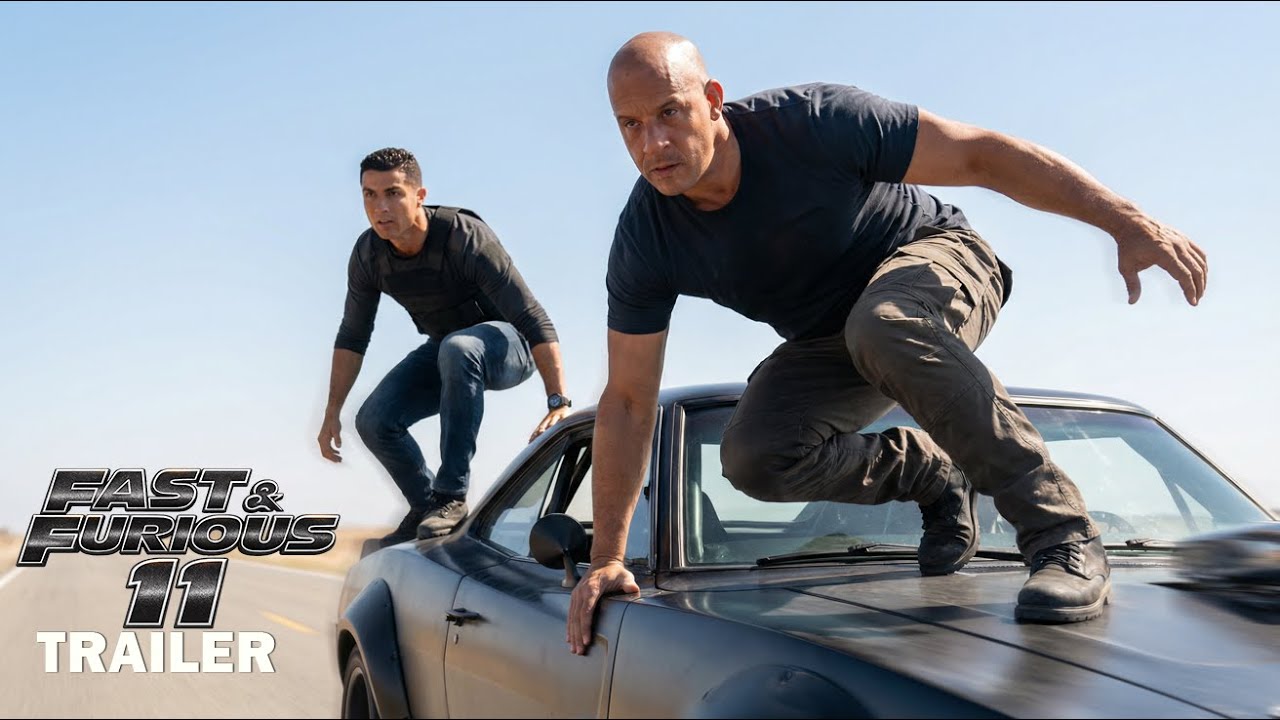
Vin Diesel’s Dominic Toretto is written and played with a heaviness that feels earned. He is no longer simply the unbreakable force at the center of the group. He is a man shaped by loss, driving forward because stopping would mean confronting the empty seat beside him. Diesel’s best moments come when he says very little, allowing grief to sit in his posture.
Dwayne Johnson’s Luke Hobbs brings a different energy, one tempered by the understanding that strength does not always mean control. His presence adds balance, grounding the story when it risks drifting into sentimentality. Meanwhile, Roman’s humor lands with a sharper edge. The jokes still come fast, but they now feel like armor rather than bravado.
Action That Serves Character
The action sequences are still large-scale, but they are staged with clearer purpose. Each chase and confrontation feels motivated by character rather than obligation. The camera lingers longer than expected, allowing geography and emotion to coexist in the same frame.
Instead of trying to outdo previous spectacles, the film refines them. The result is action that feels more tactile and less cartoonish, reminding us that danger carries weight when we care about who is behind the wheel.
Thematic Core: What Family Really Means
The central theme is not loss, but responsibility. The film asks what it means to honor someone’s legacy without turning them into a myth. It suggests that family is not defined by blood or speed, but by the choices we make when walking away would be easier.
- Family as a promise, not a slogan
- Memory as guidance rather than restraint
- Loyalty as an active decision
These ideas give the film a maturity rarely seen in long-running action franchises.
Cinematography and Tone
Visually, the film favors warmer tones and longer takes, especially during its reflective moments. The roads feel less like racetracks and more like shared history. Even the nighttime sequences glow with a sense of memory rather than danger.
The score supports this approach, leaning into restraint. Music rises when emotion demands it, not when spectacle insists on it.
Final Verdict
This is not the loudest entry in the series, nor does it try to be. Instead, it understands that longevity requires reflection. By honoring its past without being trapped by it, the film finds a new kind of power.
For longtime fans, it offers closure without finality. For newcomers, it provides a surprisingly accessible emotional entry point. Most importantly, it remembers why these characters mattered in the first place.
Fast and Furious Legacy proves that even in a franchise built on speed, sometimes the most meaningful journey is the one taken slowly, with the people who never leave your side.