

Introduction
Robert Zemeckis’s Beowulf (2007) is an audacious reimagining of the ancient Anglo-Saxon epic, marrying centuries-old myth with cutting-edge motion-capture technology. With a story rooted in themes of pride, temptation, and mortality, the film delivers both a visceral spectacle and a meditation on human flaws.

Plot Overview
At its core, Beowulf tells the tale of a warrior whose bravery is as legendary as his ego. The narrative follows his battles against the monstrous Grendel, the seductive Grendel’s Mother, and later a dragon that threatens his kingdom. What begins as an action-fantasy soon reveals itself to be a story about the burden of legacy and the haunting nature of past sins.

Performances
- Ray Winstone embodies Beowulf with both brash swagger and weary gravitas, making his hero both awe-inspiring and tragically flawed.
- Angelina Jolie dominates as Grendel’s Mother, her performance a blend of menace and allure. Her sequences shimmer with danger, each appearance elevating the film’s intensity.
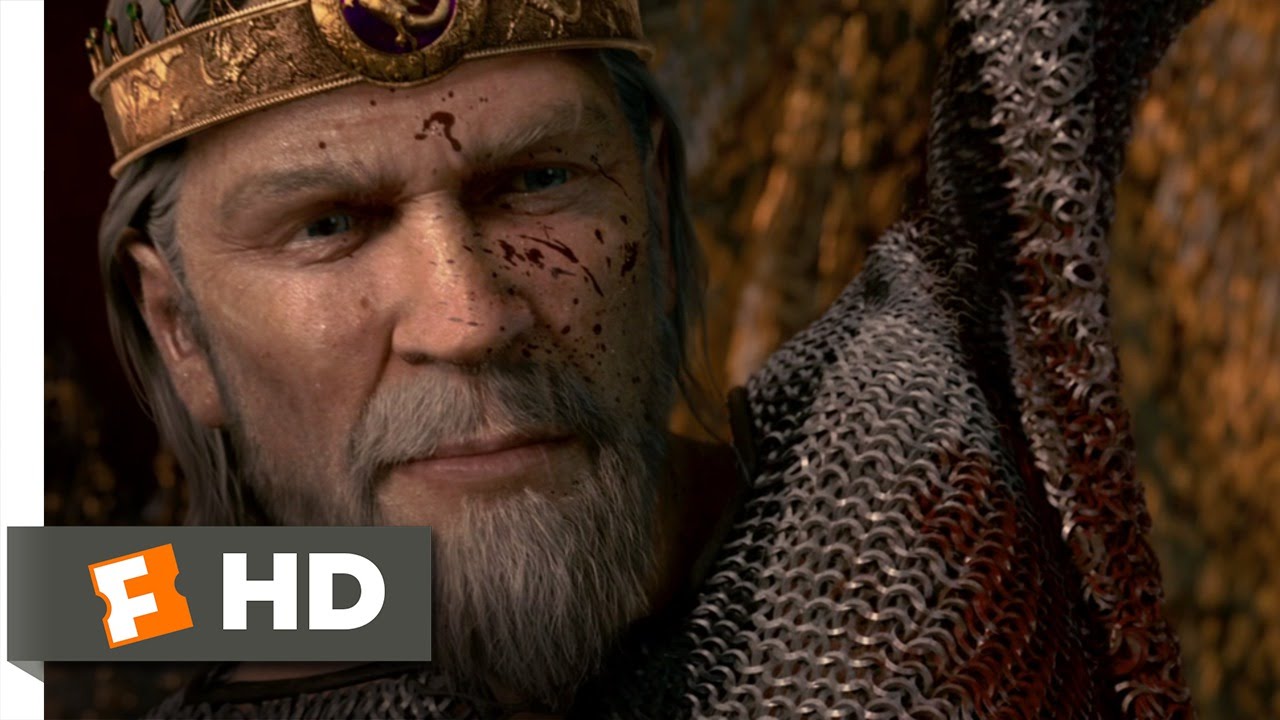
- Anthony Hopkins portrays King Hrothgar as a man worn down by indulgence and despair, a sharp contrast to Beowulf’s fiery youth.
- Robin Wright brings dignity to Queen Wealthow, her presence grounding the story with emotional restraint.
Visual Style and Direction
Zemeckis employs motion-capture animation with an ambition that was, at the time, revolutionary. While the technology occasionally dips into the uncanny, it also allows for breathtaking set pieces—mist-laden moors, cavernous mead halls, and the serpentine fire of the climactic dragon battle. The film’s pacing is brisk, its 115-minute runtime propelled by an evocative score and a succession of visually daring sequences.

Themes and Subtext
Beneath its action veneer, Beowulf grapples with timeless questions: What defines heroism? Does glory outweigh moral compromise? The film paints its protagonist as both conqueror and captive—ensnared by desire, hubris, and the consequences of his choices. This duality gives the narrative resonance, elevating it above standard fantasy fare.
Box Office and Legacy
Grossing over $196 million worldwide, Beowulf found an audience eager for spectacle. Yet, its true legacy lies in how it pushed the boundaries of cinematic technology, paving the way for future experiments in performance capture. For fantasy enthusiasts, it remains a daring if imperfect gem—a film that refuses to settle for mediocrity.
Conclusion
Beowulf is not merely an adaptation but a reinvention, breathing modern fire into an ancient tale. Its mixture of visual bravado, thematic weight, and unforgettable performances ensures its place as a bold entry in cinematic fantasy. Like the poem itself, the film endures, not for its perfection, but for its ambition and its fearless embrace of legend.