



An Elegant Descent into Psychological Darkness
There are films that rely on dialogue to explain themselves, and then there are films like The Silent Patient, which understand that silence can be its own form of confession. Directed with austere confidence and anchored by three formidable performances, this 2026 psychological mystery is less interested in solving a crime than in interrogating the fragile architecture of the human mind.

Set in a world where trauma has rendered speech optional rather than instinctive, The Silent Patient opens with an act of shocking violence and then does something far more unsettling: it refuses to explain it. From that moment on, the film asks its audience to lean in, to listen not for words, but for meaning.

A Story Built on Absence
The central figure, played with chilling restraint by Anne Hathaway, is a woman who simply stops speaking after committing a violent crime. Her silence is not catatonic, nor is it framed as weakness. Instead, it becomes an assertion of control. In a genre crowded with unreliable narrators and twist-driven plotting, this refusal to communicate feels radical.

As investigators and clinicians attempt to penetrate her silence, the film gradually shifts its perspective. What begins as a procedural mystery evolves into a psychological duel, where the desire to understand becomes indistinguishable from obsession. The script is patient, confident enough to let unanswered questions linger uncomfortably.
Empathy as a Dangerous Weapon
Liev Schreiber delivers one of his most measured performances as the psychologist determined to unlock the truth behind Hathaway’s muteness. His character is guided by empathy, but the film is careful to suggest that empathy, when unchecked, can become invasive. Each session feels less like therapy and more like a negotiation for power.
Kate Winslet, in a role that resists easy categorization, serves as both counterpoint and catalyst. Her presence destabilizes the narrative just when it risks settling into familiar rhythms. Winslet brings an emotional intelligence that deepens the film’s moral ambiguity, reminding us that understanding someone does not necessarily absolve them.
Atmosphere Over Explanation
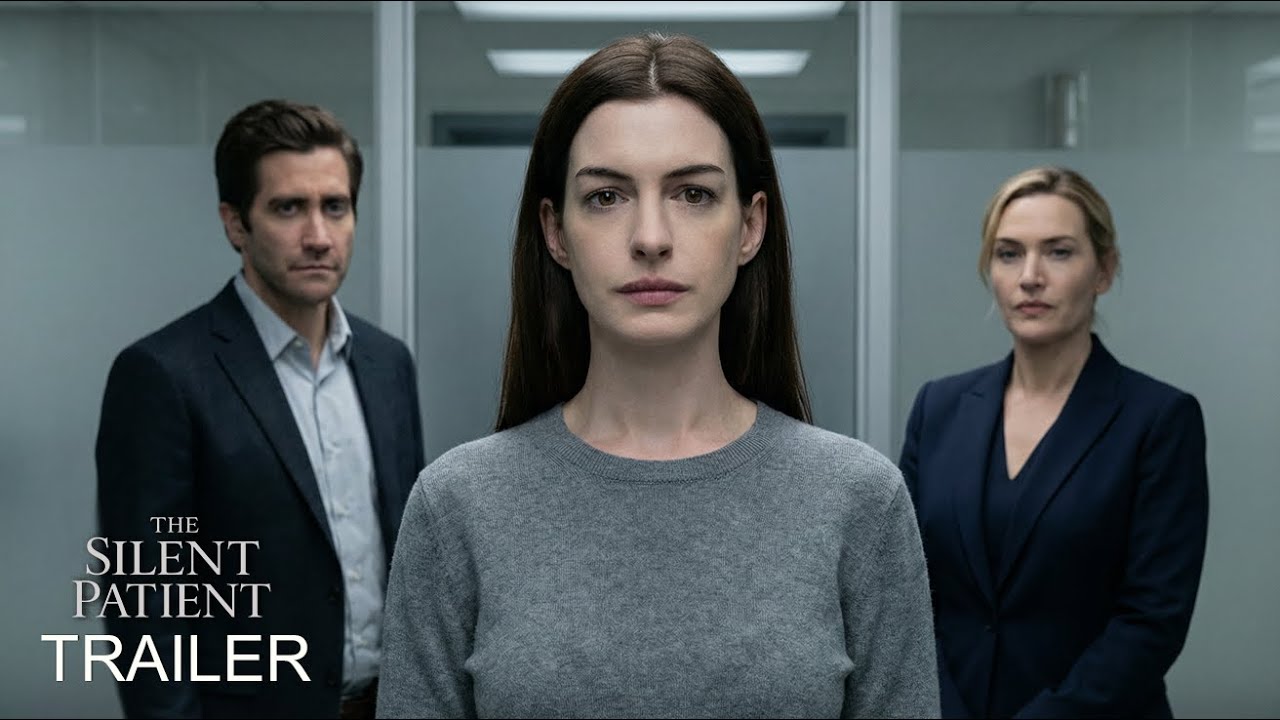
Visually, The Silent Patient is spare but deliberate. Muted color palettes and carefully composed frames reinforce the emotional claustrophobia. The camera often lingers just a beat longer than expected, creating a sense of unease without resorting to sensationalism. Silence dominates the sound design, making every footstep, breath, and rustle feel amplified.
This is not a film that rushes its audience. Some viewers may find its deliberate pacing challenging, but the restraint is the point. The tension comes not from what happens, but from what refuses to happen.
Themes That Linger After the Credits
At its core, The Silent Patient is a meditation on trauma, control, and the stories we tell ourselves to survive. It questions the assumption that truth is always liberating, suggesting instead that truth can be as destabilizing as any lie.
- Silence as agency: The film reframes muteness as an active choice rather than a symptom.
- Obsession disguised as care: Professional boundaries erode under the guise of understanding.
- The unreliability of perception: Every revelation feels provisional, every answer incomplete.
Rather than offering neat resolutions, the film leaves viewers wrestling with their own interpretations. It trusts its audience, a quality increasingly rare in mainstream psychological dramas.
Performances That Carry the Weight
Anne Hathaway’s performance is the film’s quiet center of gravity. With minimal dialogue, she conveys layers of grief, defiance, and calculation through physicality alone. It is a reminder that acting is not about speaking lines, but about inhabiting silence.
Schreiber and Winslet provide necessary friction, their performances orbiting Hathaway’s stillness without overpowering it. Together, the trio creates a tense emotional ecosystem where every glance feels loaded with intent.
Final Verdict
The Silent Patient will not satisfy viewers looking for tidy answers or explosive twists. What it offers instead is something more enduring: a slow-burning psychological experience that respects intelligence and rewards attention. Like the best mysteries, it is less about discovering what happened than about understanding why we are so desperate to know.
Long after the final frame fades, the film’s silence continues to echo. And in that echo, it finds its power.